


Vietnamese consumers have shifted toward independent travel.
Decision Lab’s latest travel trends data shows that 57% of respondents prefer independent travel, planning and booking services on their own. By comparison, 27% prefer full package tours, while 16% prefer a mix of guided and self-organised travel. Self-directed travel is the dominant preference among the consumers we surveyed.
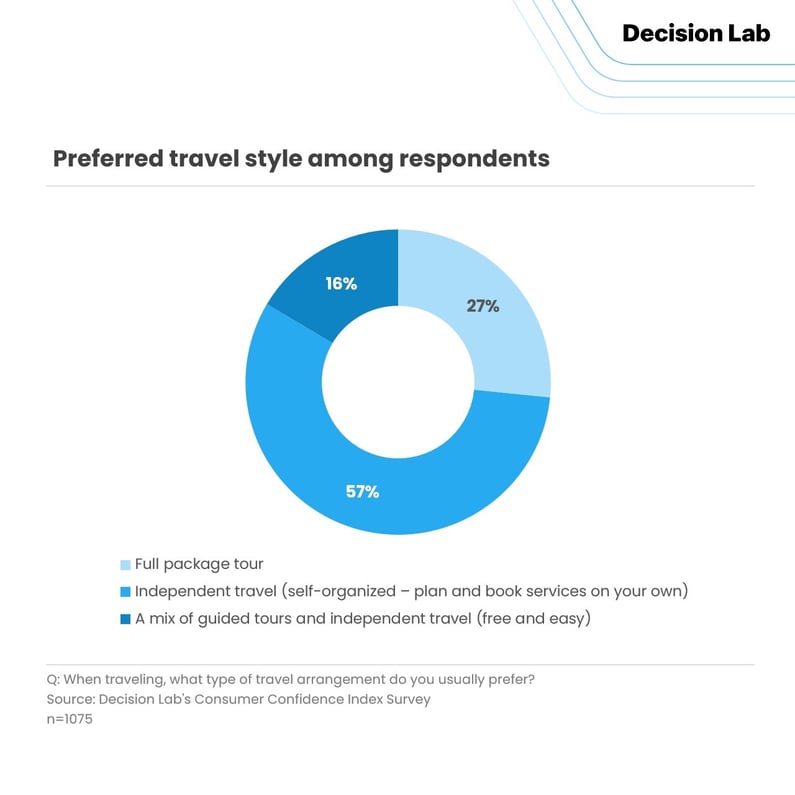
This reflects a clear shift toward greater flexibility and control. Travellers increasingly want to compare options themselves, build itineraries around their own priorities, and decide which parts of the journey they want to organise independently.
But for the industry, the more important question is what this shift actually means.
Does a growing preference for independent travel mean consumers need tour operators and booking platforms less? Or does it simply mean they are becoming more selective about where brands still add value?
We would argue it is the latter.
As travellers take more ownership of the journey, they are not rejecting travel brands altogether. They are becoming less tolerant of generic offers and more sensitive to whether a brand genuinely reduces effort, uncertainty, or decision risk. That changes the challenge for the industry: not only how to capture demand, but how to stay relevant in a market where consumers want more control while still seeking reassurance at key decision points.
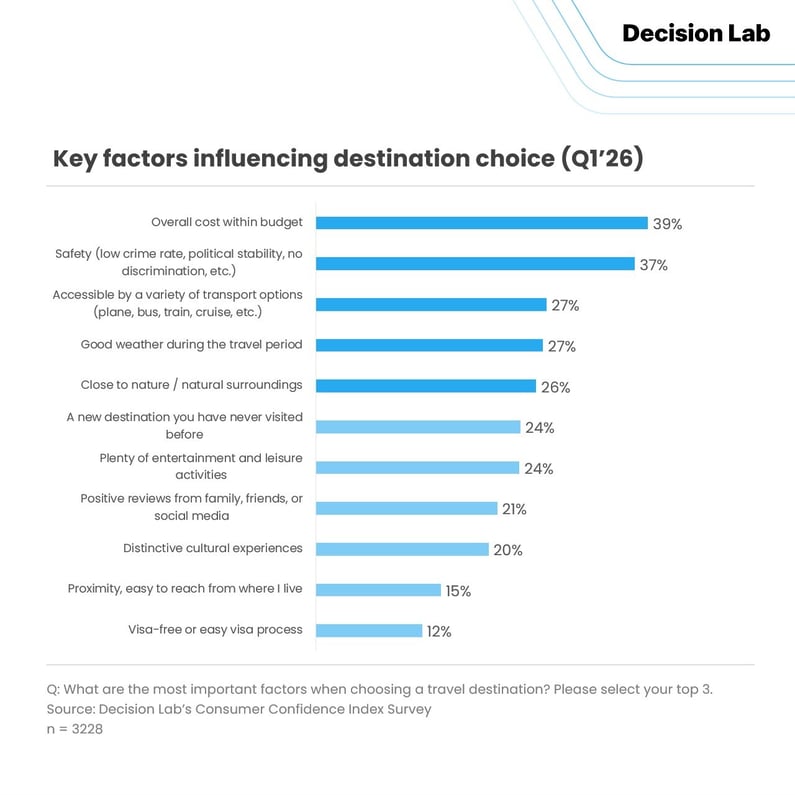
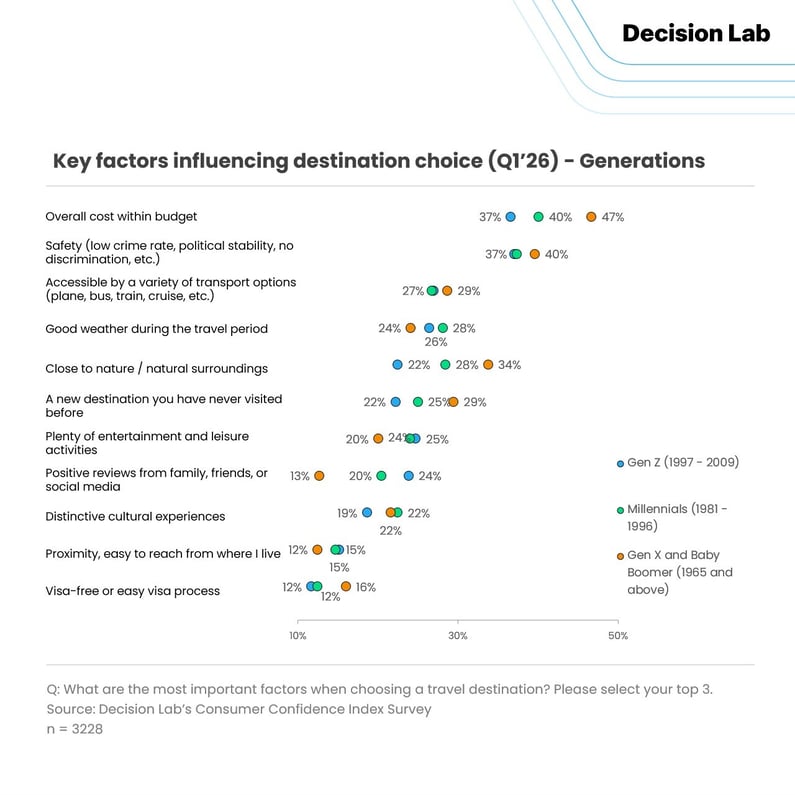
That matters because travel decisions are still shaped by highly practical filters. When choosing a destination, the top factors are overall cost within budget (39%), safety (37%), and accessibility (27%), followed by good weather (27%) and closeness to nature (26%). Experience-led drivers such as entertainment, reviews, and cultural distinctiveness still matter, but they come after those first layers of reassurance.
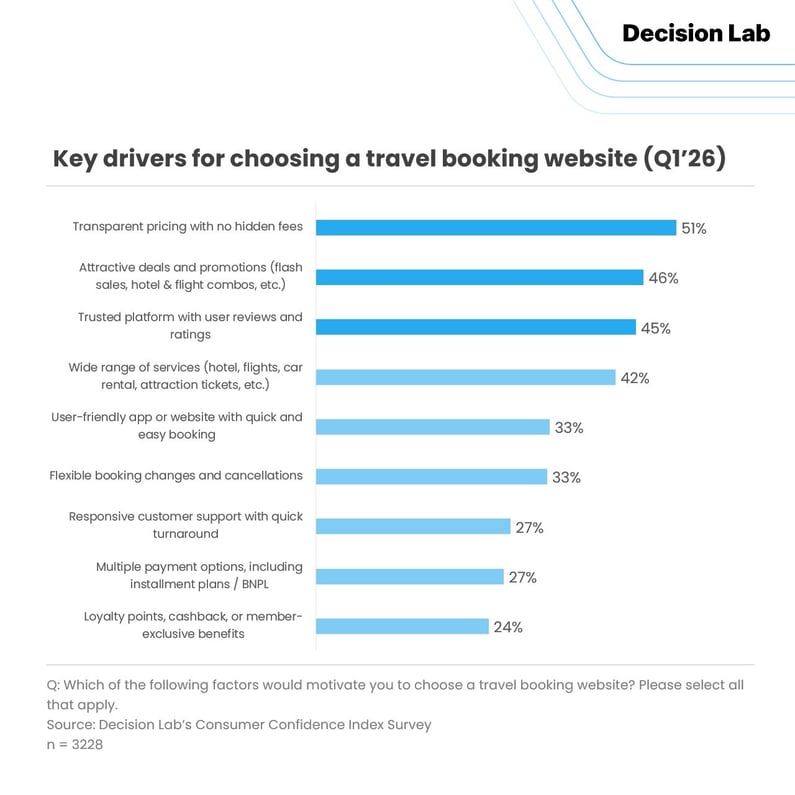
The same pattern appears in booking behaviour. The top drivers of travel booking website choice are transparent pricing with no hidden fees (51%), attractive deals and promotions (46%), trusted reviews and ratings (45%), and a wide range of services (42%). In other words: travellers are not simply looking for the cheapest option; they are looking for a decision that feels safe and easy to make.
This suggests that many travel decisions are not lost at the inspiration stage, but later, when travellers begin to question whether a trip feels manageable, safe, and worth the effort. For the industry, that shifts the challenge from simply generating interest to understanding where doubt enters the decision journey.
For tourism boards, awareness alone is not the real challenge. A destination may be known, but lack a compelling reason to choose it now.
For airlines, a route may be visible and available, but the destination does not yet feel worth prioritising over alternatives.
For tour operators, travellers remain open to help — but only when it solves a real tension: complexity, uncertainty, time-saving, or specialised access.
Different generations are not just different audiences. They are different decision systems.
The market average masks important generational differences. Older travellers prioritise affordability, safety, transparent pricing, and trusted reviews; Gen Z responds more to entertainment and social proof. Travel brands are not addressing one unified market, but different decision systems with different sources of reassurance.
The real opportunity is not just to track demand. It is to understand choice architecture.
The real opportunity is not just to track demand. It is to understand choice architecture: the trade-offs, doubts, triggers, and decision shortcuts that sit between awareness and booking. That is where research becomes strategic.
It helps brands answer questions such as:
- Which traveller segments are growing, and what do they value most?
- What makes one destination or offer feel worth the effort?
- Where are the biggest barriers to conversion across the journey?
- Which parts of the experience do consumers want to manage themselves, and which do they still want help with?
How Decision Lab helps tourism & hospitality brands
Decision Lab helps airlines, tourism boards, tour operators, hospitality groups, and destination-led businesses move from topline demand signals to decision-ready intelligence. Our work spans traveller segmentation, destination perception studies, booking journey and friction diagnosis, proposition and package testing, experience evaluation, and opportunity mapping. In practical terms, we help brands identify which audiences to prioritise, what barriers to solve, and how to sharpen propositions so they are not just visible in the market, but genuinely chosen.
In a market where travellers have more control, growth does not automatically go to the loudest brand. It goes to the brands that understand where consumers still need confidence, convenience, and clarity — and design around those needs better than competitors.
If you are navigating questions in tourism, hospitality, or destination growth — whether around traveller behaviour, proposition design, experience strategy, or demand opportunities — we’d be glad to discuss. Reach out to Chi Nguyen, Head of Experience Economy & Consulting at Decision Lab, at nuc@decisionlab.co.