


Vietnam’s education market is shifting quickly as parents balance rising aspirations with tighter financial realities. From AI adoption to the growing focus on employability, families have become more deliberate and data-driven in how they plan education pathways. Here are the first signals emerging from the 2025 market discussions.
Quick Study Recap
Signal 1: Parents Are Balancing High Aspirations with a Sharp Sense of Reality
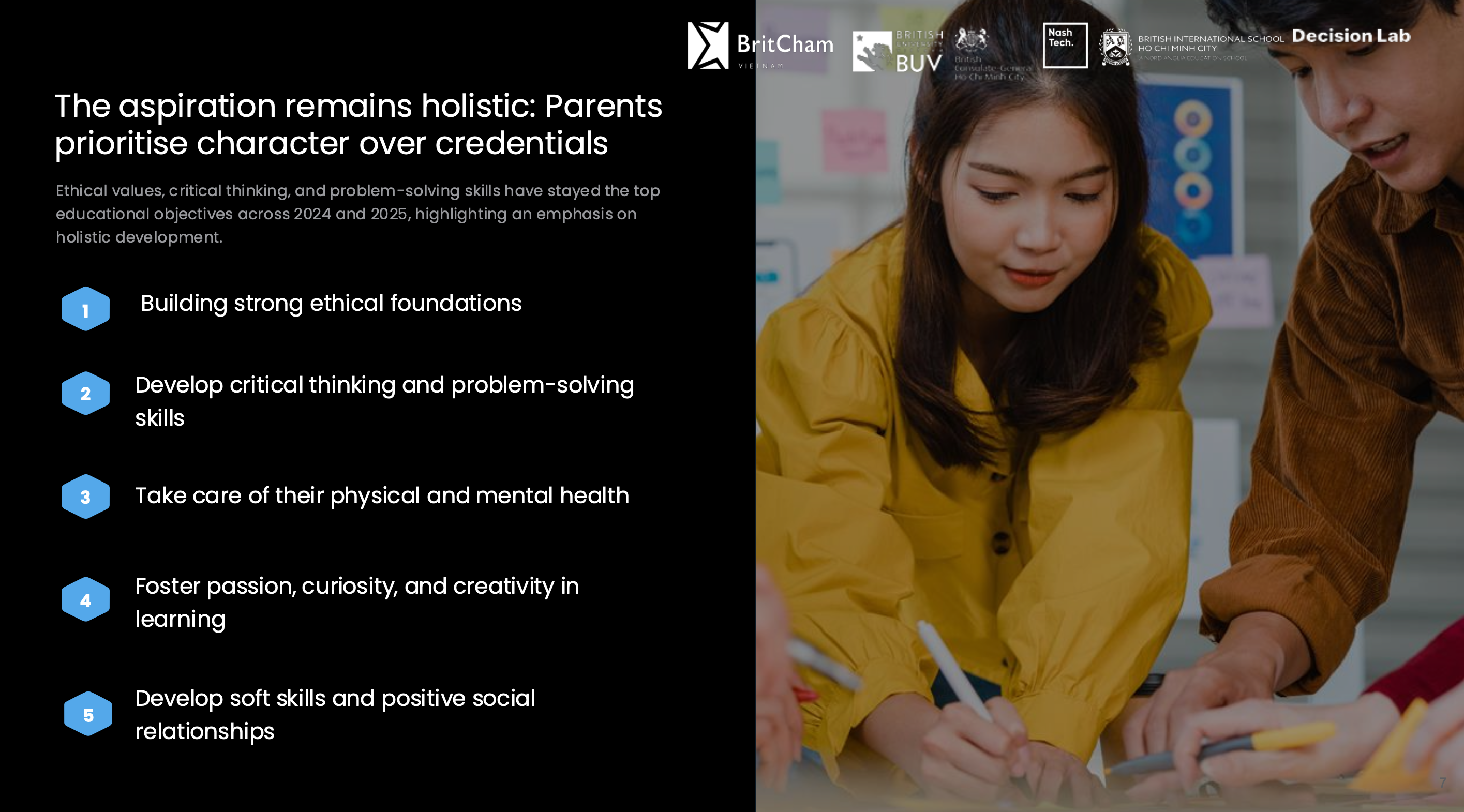
Vietnamese parents continue to seek holistic education for their children, not only academic achievement but also ethics, character, soft skills, and positive social development.
At the same time, families have become more grounded in how they make choices. They have assessed future opportunities, learning environments, and long-term fit, while also considered what feels sustainable for their situation. This balanced mindset has reshaped every education decision.
Summary:
Parents have valued whole-person development, but choices have become more intentional and guided by practical considerations and future readiness.
Mr. Thue Quist Thomasen, CEO of Decision Lab, shared:
“What we’re seeing is a shift toward more thoughtful decision-making. Parents still want a well-rounded, meaningful education for their children, but they’re also being practical thinking about values, essential skills, and future opportunities in a way that fits their family’s situation.”
Download the BritCham Vietnam Education Market Report - Key findings.
Signal 2: Parents Are Using “Just-in-Time” Planning with an international focus
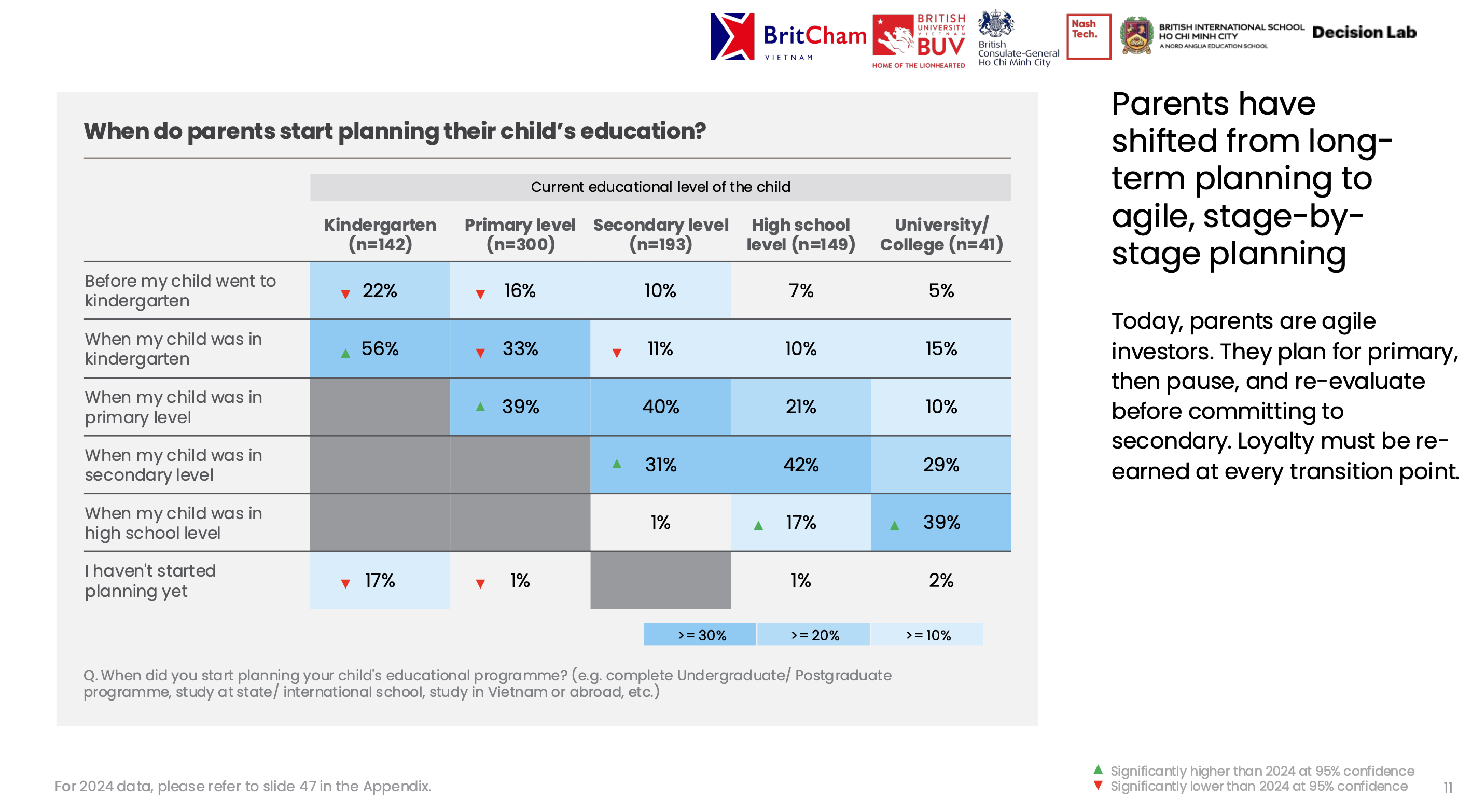
Instead of committing to a long-term pathway early, families have chosen step by step. This “just-in-time” mindset has allowed them to reassess goals at each stage, based on the child’s growth, academic progress, and evolving needs.
Within this flexible approach, bilingual and international schools have become key anchors. These pathways have offered global exposure, stronger language foundations, and more options later on, while still allowing parents to adjust direction when needed.
Summary:
Education planning has become phased and flexible, with bilingual and international schooling serving as strategic checkpoints at each transition point.
Download the BritCham Vietnam Education Market Report - Key findings.
Signal 3: AI Is Expected to Be Supportive, not Substitutive in Learning
AI has become a daily tool in students’ lives, contributing to a growing digital generation gap. Students are increasingly native users of AI, while many parents are still learning about its role and its long term impact on education.
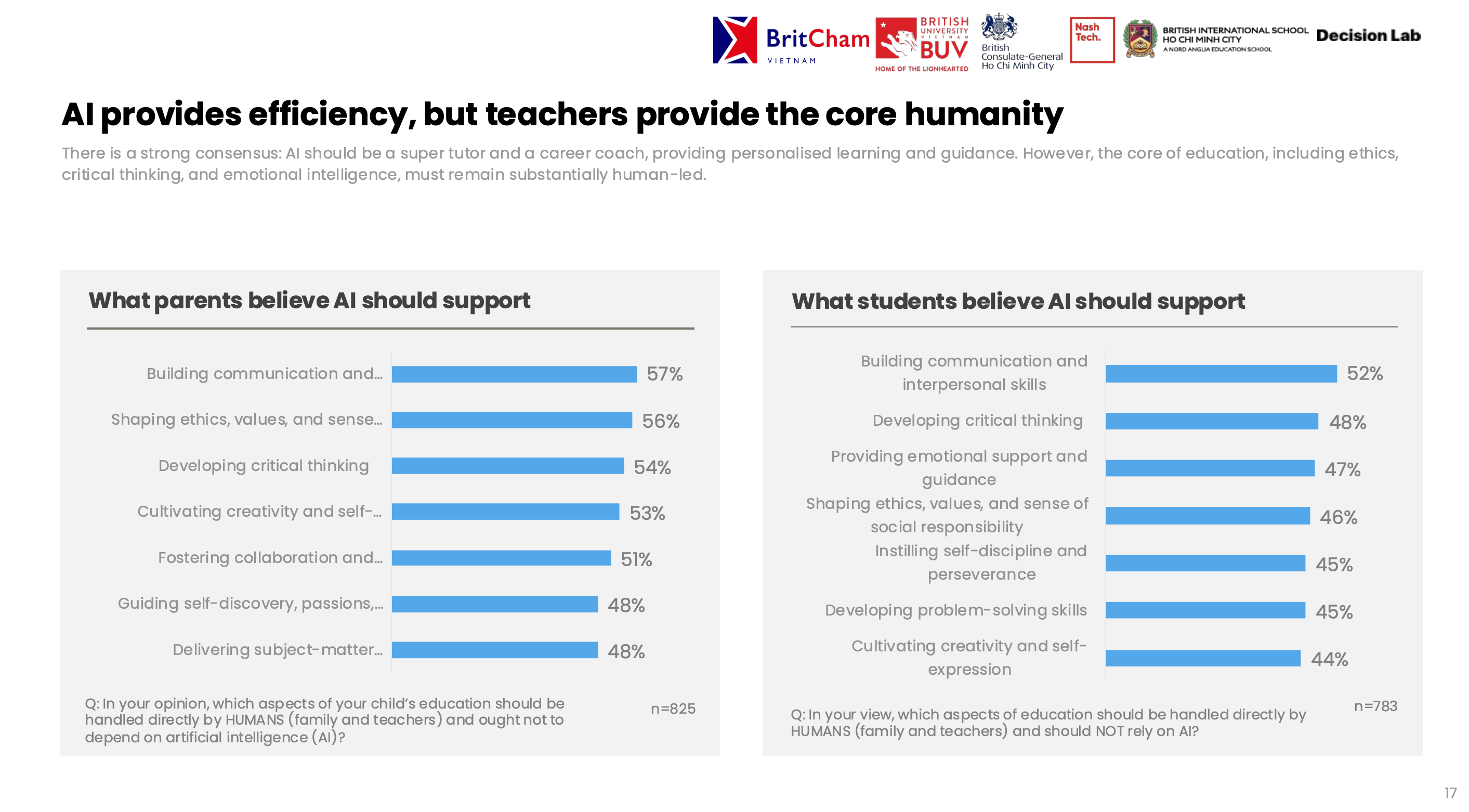
Despite this gap, there has been clear agreement between parents and students on how AI should be used. AI has been welcomed for personalised learning support and career guidance, and has been valued for its efficiency and convenience. However, both groups have agreed that the core elements of education, including ethics, critical thinking and emotional intelligence, should remain human-led rather than replaced by technology.
Summary:
AI has been embraced as a supportive tool for efficiency and personalised learning, while core educational values have been expected to stay human-centered.
Ms. Duong Hoang Thanh Giang, Head of Education Practice at Decision Lab, commented:
“Parents are no longer locking into one long-term education pathway early on. Instead, they are making flexible ‘just-in-time’ decisions, with bilingual and international education becoming important touchpoints. And although AI is becoming more present in learning, both parents and students are clear that technology should support efficiency and personalisation, not replace the human foundations of education such as critical thinking and emotional intelligence.”
Download the BritCham Vietnam Education Market Report - Key findings.